


Bungee Beat
4.815.00 Reviews
App Specs
- Version
- 0.17
- Updated On
- License
- Free
- Downloads
- 100,000+
- Developer
- FourM Inc.
- Categories
- Action
- Platform
- Android
Screenshots
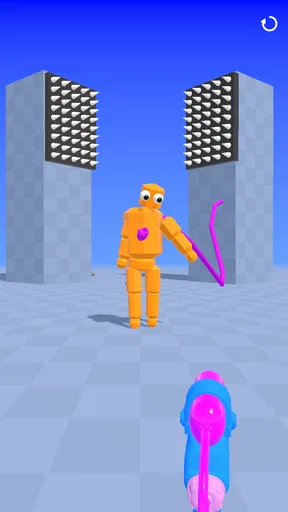
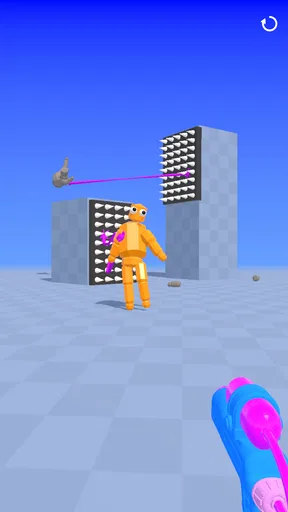
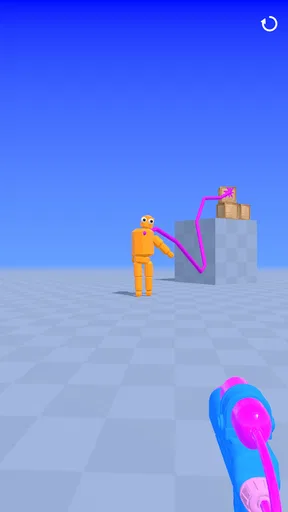
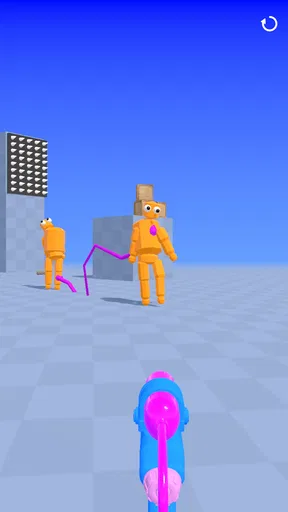
 Analysis by AppCompare
I found Bungee Beat easiest to understand once I stopped treating it like a conventional action game. Its central idea is to use stretchy gum to link enemies and objects, then let the resulting connection do the work. That gives each encounter a small physics puzzle inside an action-game wrapper: you are not just reacting to what is in front of you, but looking for a useful pairing and imagining what might happen when the line pulls tight.
That hook makes it approachable for a first-time player, but it also sets expectations. This is a game for people who enjoy experimenting with cause and effect, not for someone looking for a deep combat system or a story-led adventure. My best advice is to begin with curiosity rather than trying to rush through every situation. A connection that seems odd at first can be more satisfying than simply repeating the most obvious move.
What to expect from the elastic action
I find the elastic action easiest to appreciate when I treat each encounter as a chance to test one idea, rather than as a race to make the biggest move. That mindset makes the game’s unusual interactions feel more readable and helps me notice which choices are actually useful. With that expectation in place, the first session becomes less intimidating; the next section follows the path from opening the game to understanding a successful connection.
A compact idea with room to experiment
FourM Inc. has built the game around a clear interaction: connect things with elastic gum and see how their physics play out. That simplicity is a strength. You can grasp the premise quickly, and the action has a playful, slightly unpredictable quality that makes a successful setup feel earned. The fun comes less from memorizing a long list of commands and more from reading the scene and choosing what to link.
Compared with familiar action games that emphasize aiming, combos, or precise timing, Bungee Beat shifts attention toward relationships between objects. It asks, in effect, “What can I connect, and what will that connection change?” That distinction is important when deciding whether it suits you. If you like physics-based play and enjoy testing a hunch, it has a more unusual appeal than a standard run-and-attack game. If you want tightly scripted combat where each encounter has one obvious rhythm, its open-ended premise may feel less direct.
The game is listed as free, so it is easy to try without making an upfront purchase. Its age rating is Everyone, which makes the presentation broadly accessible, although that rating does not tell you whether the physics puzzle style will suit every player. The overall reception is encouraging: it holds a 4.8 average from 865 ratings, with 100K+ installs. I treat those figures as a useful signal of interest, not a promise that every session will click for you.
Why the first few attempts matter
When you first open a game built on a single unusual mechanic, it is tempting to judge it by how quickly you can produce a dramatic result. I would give Bungee Beat a little more patience than that. The first meaningful success is often about learning to notice which targets and objects can be brought into the same plan. Once you start thinking in connections instead of isolated taps or attacks, the premise becomes much clearer.
Worth Reading Before You Choose

Flipboard Shows What News Apps Must Do Beyond the Feed

Switching to Android Auto Means Rethinking Your Driving Routine

Google Calendar Makes a Crowded Week Easier to Manage

Ludo King Makes the Most of the Minutes Between Plans

Baby Panda World Brings Quick Play to Modern Phones, but Its Game Library Feels Busy

ESPN’s Live Game View Makes Following Close Games Easier
Try to make one deliberate choice at a time. Pick a likely pair, observe what the link changes, and then adjust your next attempt based on what happened. This is more useful than making several speculative moves at once, because it helps you understand which part of your decision mattered. The game’s elastic concept naturally invites trial and error; a small, readable experiment turns that into learning rather than random flailing.
From installing to your first satisfying result
For a first session, I would keep the goal modest: observe what can be linked, make one deliberate choice, and use the result to guide the next attempt. This is a more reassuring way to learn than changing several things at once, especially when physics makes an outcome less predictable than a standard attack. Once that first useful result clicks, it is easier to decide whether the game’s experimental rhythm suits your routine.
Keep the first session simple
For a newcomer, I would start the first session when you have a few uninterrupted minutes, rather than trying to learn the interaction while distracted. You do not need to approach it like a serious training exercise; just give yourself enough attention to notice what the gum connects and how the objects respond. The most useful early habit is to pause briefly before acting and scan for a target-object pairing that seems likely to create movement or interference.
On Android, the listed minimum operating system is version 8.0, so check that your device meets that requirement before you expect to install and play. The current version is 0.17, which is a useful detail when identifying the game, but I would not infer a particular feature set or level of polish from a version number alone. If you are comparing devices or deciding whether to install, focus on the actual compatibility requirement and the game’s central mechanic rather than assuming it needs a high-end phone.
There is no complicated setup routine I would recommend. Install it, enter a first encounter, and pay attention to what the game presents as connectable. If a result is confusing, repeat the same basic approach with one small change. For instance, keep your intended target in mind and vary the object you connect it to, rather than changing your whole plan between attempts. That makes the cause and effect easier to read.
How to reach the first meaningful success
A satisfying early win is not necessarily the biggest or flashiest outcome. It is the moment when you make a connection on purpose, anticipate its likely effect, and see the scene respond in a way that confirms your reasoning. That gives you a practical understanding of the game’s language. From then on, each new setup feels less like a guess and more like a small physical problem you can solve.
My suggested workflow is simple: scan the scene, choose one connection that seems useful, make it, and watch the response before deciding what to do next. If the first attempt does not go as expected, treat the result as information. Did the objects move in a different way than you imagined? Was the pairing less useful than another one might be? Adjust one decision and try again. This approach is especially helpful because physics interactions can produce results that are less predictable than a standard button-driven attack.
A realistic use case is a short break between errands or during a quiet commute, when you want something interactive but do not feel like learning a large set of systems. The central rule is quick to grasp, while the satisfaction comes from working out a better connection. I would still choose a safe, stable moment to play if you want to think through a setup; the game is more enjoyable when you can pay attention to the objects rather than tapping hurriedly without looking.
What can feel confusing at first
The word “gum” may make the interaction sound like a simple aiming mechanic, but the more useful mental model is a flexible link between things. If you expect each connection to behave like a direct attack, you may miss the point. Think about what a line between two things could make them do to one another, and whether that interaction helps you deal with the situation. The result is not only about choosing a target; it is also about choosing a relationship.
Another possible source of friction is uncertainty. Physics-based outcomes can feel less tidy than a familiar action game’s fixed attack animation. If a move seems inconsistent, avoid immediately repeating it several times with no change. Instead, pause and vary one part of the setup. This gives you a clearer sense of whether your initial pairing was ineffective or whether the way the scene was arranged mattered more than you expected.
It is also worth separating the premise from your personal taste. Some players enjoy a little unpredictability because it creates funny or surprising moments. Others find it frustrating when they cannot predict an outcome precisely. If you fall into the second group, Bungee Beat may still be worth a quick try, but a traditional action title with direct controls and dependable attacks is likely to be a better match for longer sessions.
Turning experiments into better decisions
Once the basic interaction makes sense, the next step is to become more selective. Rather than connecting the first things you notice, look for a link that could create a useful chain of movement or put an enemy and an object into a more favorable relationship. The important insight is that the gum is not just a tool for contact; it changes how the connected things can affect each other. Thinking one consequence ahead makes the game feel more deliberate.
A second useful habit is to learn from a failed setup without turning every miss into a full restart of your thinking. Keep the part that seemed promising and change just one element. If you chose the right target but the wrong object, preserve the target and test a different object. If the connection itself made sense but the timing or positioning did not, reconsider that part. This one-variable approach is a practical way to build confidence in a game whose appeal depends on experimentation.
A third trade-off is how much time you want to spend exploring. If you are in the mood for quick novelty, trying playful connections can be more enjoyable than optimizing every move. If you want a more skill-focused session, slow down and compare outcomes carefully. The same core mechanic supports both attitudes, but the game is at its best when you choose your own pace instead of expecting it to supply the structure of a competitive action game.
Who will enjoy it, and when to choose something else
I see the game as a better match for curious players who enjoy testing cause and effect than for anyone seeking precise, repeatable combat or a substantial story. That distinction matters most when choosing what to play during a short break: a playful experiment can be refreshing, while a more conventional action game may be preferable when you want clear objectives and dependable controls. The next section weighs that fit against the kinds of sessions players may want.
A good fit for curious action players
I would recommend Bungee Beat to players who like unusual mechanics, light problem-solving, and the pleasure of seeing a plan play out through physics. It can also suit someone who wants an action game that feels different from the usual pattern of aiming and attacking. Because the premise is easy to explain, it is a reasonable choice for a first try even if you do not usually play physics games, provided you are comfortable learning by experimentation.
It is less likely to satisfy players who want elaborate progression, detailed narrative, or precise competitive combat. Those are not the strengths suggested by its central idea, and I would not install it expecting a sprawling campaign or a finely tuned esports-style challenge. If direct control and repeatable outcomes matter most to you, a more conventional action game will probably be a better use of your time.
The game is an action title, but its most distinctive moments come from the elastic connections rather than from standard combat conventions. That gives it a niche of its own: more playful and physics-minded than a straightforward brawler, but more immediately active than a passive puzzle. The trade-off is that players who need a clearly signposted objective at every moment may have to work harder to decide what counts as a clever move.
A measured recommendation
Bungee Beat is a promising pick when you want a free, easy-to-approach experiment built around an unusual action mechanic. I like that its central idea gives me a reason to inspect the scene instead of relying on reflex alone. I would approach it as a playful physics game with action elements, not as a replacement for a deep combat game. That expectation makes its strengths easier to appreciate and its limitations easier to accept.
For a first-time player, the path is reassuringly concrete: install it on a compatible Android device, look for a promising pair, make one intentional connection, and study what happens. A useful result is less about luck than about learning to think in links. If that small loop sounds satisfying, give it a try and let yourself experiment. If you would rather have direct attacks, predictable encounters, or a larger story to follow, choose another action game instead.
My overall view is positive, with one clear qualification: the concept is the reason to play, and it will not appeal equally to everyone. The 4.8 average and 100K+ installs suggest that many players have found something enjoyable in it, while the modestly identified version 0.17 is a reminder to judge the experience on its own terms rather than on assumptions about a long-established franchise. For curious players, Bungee Beat is worth a hands-on try; for players who dislike trial and error, its elastic logic may be more of a hurdle than a hook.
Pros
- Simple controls make it easy to pick up and play.
- Short levels work well for quick gaming sessions.
- Timing-based gameplay rewards focus and practice.
- Colorful visuals make the action easy to follow.
- Restarting after a missed beat is quick and convenient.
Cons
- Precise timing can feel frustrating on touchscreens.
- Gameplay may become repetitive after extended play.
- Progress can depend heavily on memorizing level patterns.
- Visual effects may make obstacles harder to track.
- Its straightforward mechanics may not appeal to players seeking depth.
FAQs for Bungee Beat
What is Bungee Beat?
Bungee Beat is a rhythm-based game built around timing, music, and responsive taps. Players follow the beat to complete musical challenges, aiming to hit notes at the right moment and improve their performance. Its appeal is likely to depend on how much you enjoy rhythm games and learning patterns through repeated play. Check the store listing for current gameplay details, screenshots, and device requirements before downloading.
How do you play Bungee Beat?
The basic rhythm-game loop is to watch or listen for musical cues and tap at the appropriate moments. Accurate timing helps you perform better, while missed or late inputs can affect a round’s result. The specific controls, scoring rules, and available modes can vary by version, so look over the in-game tutorial and the latest app-store description when you first launch it.
Is Bungee Beat free to download, and does it include purchases or ads?
Whether Bungee Beat is free, supported by advertising, or offers optional in-app purchases can depend on the platform and the version available in your region. Check the Google Play or Apple App Store listing for its price, purchase disclosures, and age rating before installing. If purchases are available, review your device’s payment settings, especially if children may use the device.
Can I play Bungee Beat offline?
Offline availability is not guaranteed and may depend on which features you want to use. A rhythm game might allow some play without a connection while requiring internet access for downloads, updates, account features, advertisements, or online content. To avoid interruptions, check the current store listing and try launching the game with connectivity turned off after installation; download any required content first.
Which devices support Bungee Beat, and what should I check before downloading?
Compatibility depends on the version of Bungee Beat offered for your device. Before downloading, confirm that your phone or tablet meets the operating-system and hardware requirements shown in its official store listing, and make sure enough storage is available. Also review the game’s permissions, age rating, privacy information, and recent user feedback to decide whether it suits your device and preferences.


